Deep Conversation Starters for Dates, Friends & Work

Meaningful Conversation Starter Guide: Deep Questions for Dating, Friendship, and Networking
Small talk has its place, but the conversations people remember usually start with one thoughtful question and the space to answer it. This printable guide is designed for real-life moments—first dates, new friendships, team coffees, conferences, and text threads—when it helps to have a few reliable ways to invite honesty, curiosity, and connection without making things awkward.
Research and practical communication advice consistently point to the same truth: connection grows through attentive listening, emotional safety, and genuine curiosity. If you want a deeper dive on relationship communication, you can explore resources from Greater Good Magazine (UC Berkeley), the American Psychological Association, and—on the professional side—networking guidance from Harvard Business Review.
When deeper questions help (and when they don’t)
Deeper questions work best when the vibe is relaxed, attention is available, and there’s room for a real answer—think walks, dinner, long drives, or a quiet corner at an event. When someone is rushed, stressed, or signaling they want light conversation, “deep” can feel like pressure. Timing that feels respectful often builds connection faster than intensity.
A helpful progression is to start with “medium depth” before “deep”: values → experiences → vulnerabilities. Watch for green lights (eye contact, longer answers, follow-up questions) and red lights (short replies, topic changes, closed body language). And remember: one good question beats a rapid-fire list—allow pauses and let the conversation breathe.
Conversation depth ladder by setting
| Setting | Good starting depth | Examples of safe openers | Signals to go deeper |
|---|---|---|---|
| First date | Medium | “What’s something you’ve been enjoying lately?” | They ask you back, share stories, laugh naturally |
| New friendship | Medium → deep | “What kind of friendships feel most supportive to you?” | They talk about values, boundaries, or meaningful memories |
| Networking event | Light → medium | “What are you excited to build this year?” | They share motivation, challenges, or lessons learned |
| Texting | Light → medium | “Want a fun question or a real one?” | They choose “real” and respond with more than a sentence |
A simple framework for questions that don’t feel forced
The most natural conversation starters are specific, open-ended, and emotionally safe—easy to answer without oversharing. One approach that keeps things smooth is the “three doors” method: ask a question that can be answered as (1) a story, (2) an opinion, or (3) a value—then follow the door they open.
To reduce pressure, offer a soft opt-out: “If that’s too personal, we can keep it light.” People relax when they know they’re not being tested. From there, mirror and deepen: reflect one phrase they said, then take one step deeper (“What made that important to you?”). Finally, balance curiosity with reciprocity—after a meaningful answer, share a short related piece about yourself so the conversation feels mutual, not like an interview.
Conversation starters for dating that build emotional momentum
Dating questions land best when they’re warm and future-facing without being interrogative. Try one, then use gentle follow-ups like “What was that like for you?” or “What did you take from that experience?” instead of switching topics too quickly.
- Values and lifestyle: “What does a great weekend look like for you when life is going well?”
- Emotional intelligence: “What helps you feel understood in a relationship?”
- Conflict and repair: “When there’s a misunderstanding, what’s a good way to reset with you?”
- Joy and meaning: “What’s a small thing that reliably makes your day better?”
- Future focus without pressure: “What’s something you’d love to learn or experience in the next year?”
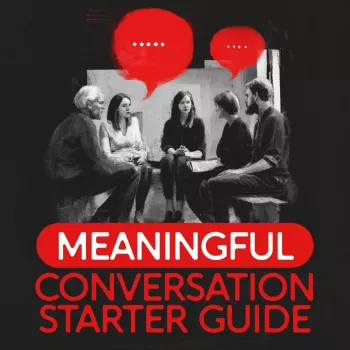
If you like having a few go-to options ready before a date, the Meaningful Conversation Starter Guide (printable) is built for quick pre-date review and easy, natural follow-through.
Conversation starters for friendship that create trust
Friendship tends to deepen when people feel accepted and understood, not rushed into intimacy. “Fun depth” questions work especially well here: light enough to be playful, meaningful enough to reveal personality.
- Connection style: “What makes you feel close to someone?”
- Boundaries and respect: “What’s a boundary you’re glad you learned to set?”
- Support preferences: “When you’re having a hard week, do you want advice, distraction, or listening?”
- Identity and growth: “What’s something you’ve changed your mind about over time?”
- Fun depth: “What’s a ‘random’ interest you could talk about for 10 minutes?”
Make it mutual: after their answer, share one sentence about your own preference (“I’m more of a listening-first person”) to normalize openness without turning it into a monologue.
Conversation starters for networking that feel human (not salesy)
Professional conversations go better when they’re about people first and titles second. A good networking question invites meaning, momentum, and learning—without cornering someone into a pitch.
For events where you want to show up sharp and present, pairing conversation prep with a focus plan can help. If staying on-task is the bigger challenge than talking, Finally Focused: The Anti-Procrastination Workbook supports routines that make follow-ups, outreach, and relationship-building easier to sustain.
How to keep the conversation going after a great answer
Printable guide: an easy way to have questions ready when it matters
The easiest way to feel confident socially is to reduce the “blank under pressure” moment. The Meaningful Conversation Starter Guide (printable) is designed to be printed or saved on your phone for quick access before dates, meetups, and events. It includes light openers, medium-depth bridges, and deeper reflection questions so you can match the moment instead of forcing a vibe.
FAQ
How to start a deep conversation over text
Offer a choice like “fun question or real question?”, then start with a specific medium-depth opener that’s easy to answer without oversharing. Include a low-pressure opt-out (“we can keep it light”), and after they respond, share a short answer of your own to keep it mutual.










Leave a comment