Daily Calm Toolkit: 4-in-1 Anxiety Relief Bundle
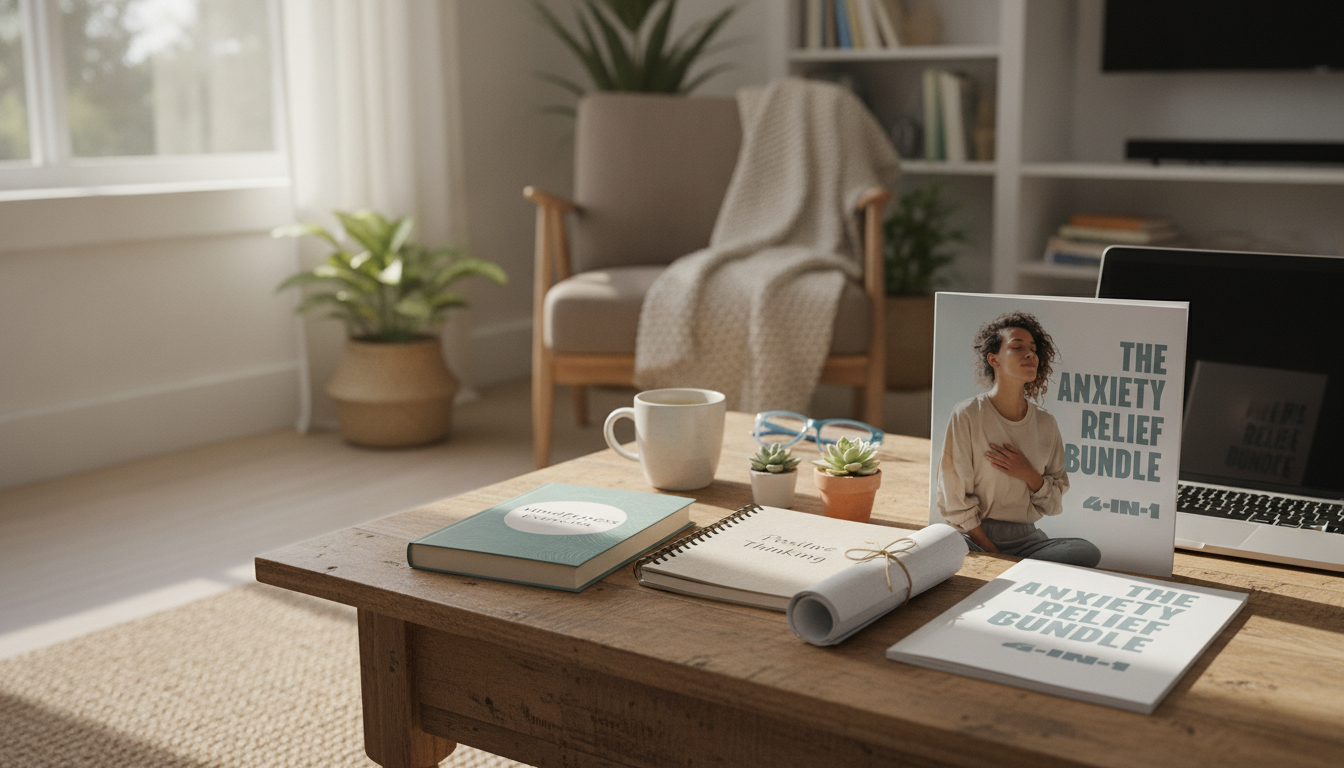
The Anxiety Relief Bundle: A Path to Calm — A 4-in-1 Toolkit for Daily Grounding
Calm is easier to access when the next step is clear. The The Anxiety Relief Bundle: A Path to Calm (4-in-1 Bundle) brings four practical supports into one place: mindfulness exercises, positive thinking practices, a printable checklist, and a course-style outline. Together, they create a repeatable routine you can lean on during everyday stress—and return to during higher-anxiety seasons—without having to reinvent your plan each time.
Anxiety can show up as racing thoughts, tension in the body, over-preparing, avoidance, or a constant “something’s wrong” feeling. Having tools that work both in-the-moment and over time can make anxious moments feel less personal and more workable. For background on anxiety disorders and common symptoms, the National Institute of Mental Health is a helpful starting point.
What’s Included in the 4-in-1 Bundle
This bundle is built to make support feel actionable. Each component does a different job: calming the body, organizing attention, softening unhelpful thinking, and keeping practice consistent.
- Mindfulness exercises to shift attention from spiraling thoughts to present-moment cues (breath, body, senses).
- Positive thinking tools that focus on realistic reframing and kinder self-talk rather than forced optimism.
- Printable checklist for quick daily structure: morning setup, mid-day reset, evening wind-down, and “in-the-moment” steps.
- Course outline format that turns scattered tips into a progression—helpful for consistency and tracking progress.
- Designed for repeat use: the same tools can support both mild day-to-day stress and tougher, higher-anxiety periods.
Bundle Components and When to Use Them
| Component | Best for | Typical time needed | Example outcome |
|---|---|---|---|
| Mindfulness exercises | Racing thoughts, physical tension, restlessness | 3–10 minutes | Lowered intensity and better focus |
| Positive thinking practices | Catastrophizing, harsh inner critic, worry loops | 5–15 minutes | More balanced interpretation of events |
| Printable checklist | Decision fatigue, low motivation, inconsistent routines | 1–3 minutes to review | Clear next step without overthinking |
| Course outline | Building a habit and measuring change over weeks | 15–30 minutes per session | Steadier routine and improved follow-through |
Who This Bundle Fits Best
- People who prefer a structured plan instead of piecing together techniques from multiple sources.
- Beginners who want step-by-step practices without needing prior mindfulness experience.
- Busy schedules: short exercises and a checklist make it easier to restart after missed days.
- Anyone who wants both “in the moment” calming tools and longer-term mindset support.
- Not a replacement for professional care; best used as a self-guided support alongside healthy habits and, when needed, clinical treatment.
Mindfulness can be especially useful when it’s practical and repeatable. For an overview of how mindfulness is commonly described in psychology, see the American Psychological Association’s mindfulness resource.
A Simple Daily Routine Using the Bundle (Morning, Midday, Evening)
A routine works best when it’s small enough to keep. The goal isn’t “perfect calm”; it’s quicker recovery and a clearer next step.
- Morning (2–7 minutes): choose one short mindfulness exercise to set a calmer baseline before tasks begin.
- Midday reset (3–5 minutes): use the checklist to spot early signs (tight shoulders, shallow breathing) and pick one grounding action.
- Evening (5–15 minutes): use positive thinking prompts to review the day with balance—identify what went well, what was hard, and what’s controllable tomorrow.
- Weekly (15–30 minutes): follow the course outline to deepen one skill at a time (body awareness, thought labeling, self-compassion, worry planning).
- Keep it flexible: consistency matters more than duration; a 3-minute practice still counts.
If you like building a dedicated “calm corner,” a simple tray can help keep your printed checklist, pen, and a few grounding items (tea, mints, a stress ball) in one visible spot. The Nordic Rabbit Statue Table with Tray can double as a functional surface for that kind of reset station.
How the Mindfulness Exercises Help in Anxious Moments
Positive Thinking Without Pretending Everything Is Fine
Printable Checklist: Turning Calm Strategies Into a Habit
If you want your routine to feel less clinical, adding one grounding visual to your space can help cue the habit. A statement decor piece like the Modern Astronaut Floor Sculpture can serve as a consistent “pause point” in the room—an anchor that reminds you to breathe, reset posture, and return to the next checklist step.
Course Outline Structure: Progress You Can Follow
When to Get Extra Support
For more detail on symptoms and treatment approaches, the Mayo Clinic overview of anxiety disorders is a reliable reference.
Shop the Bundle
If you’re ready for a structured, repeatable set of tools you can use daily, start with The Anxiety Relief Bundle: A Path to Calm | 4-in-1 Bundle | Mindfulness Exercises, Positive Thinking, Printable Checklist & Course Outline. It’s designed to help you ground quickly, think more clearly under pressure, and build a routine that holds up beyond one “good day.”
FAQ
Is this bundle suitable for beginners who have never tried mindfulness?
Yes. The exercises are short and approachable, the checklist gives simple next steps when you’re unsure what to do, and the course outline helps you progress gradually without needing prior experience.
How long does it take to feel results from a daily anxiety routine?
Some people feel immediate, brief relief from grounding techniques in a few minutes. Longer-term change—like faster recovery and fewer spirals—usually comes from consistent practice over several weeks.
Can this replace therapy or medication?
No. It’s a self-guided support tool that can complement healthy habits and professional treatment, but persistent or severe symptoms are best addressed with a qualified clinician who can tailor care to your situation.










Leave a comment