Daily Focus Mini-Course: Eisenhower, Time Blocking, Pomodoro
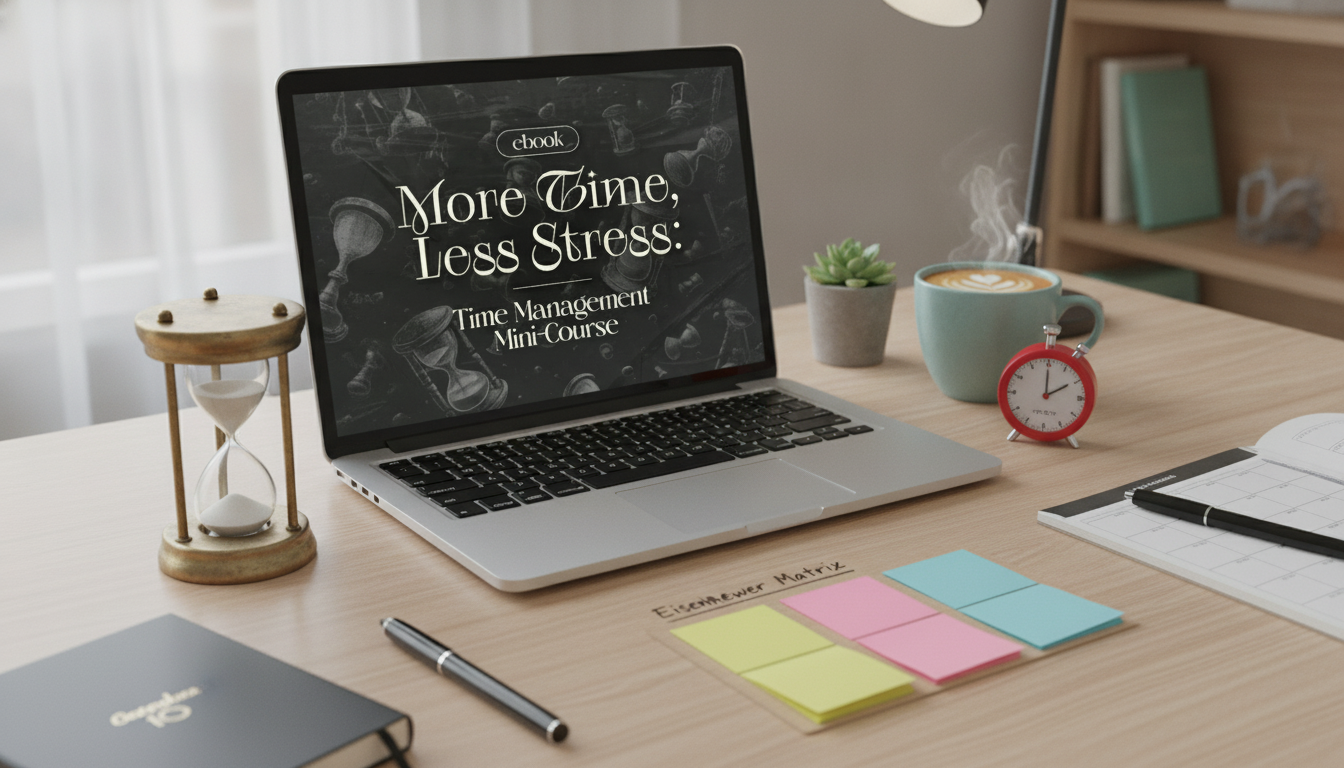
More Time, Less Stress: A Practical Mini-Course for Daily Focus
Being busy doesn’t always mean making progress. Many days are filled with messages, meetings, and quick tasks—yet the most important work keeps getting pushed to “later.” This practical mini-course ebook pulls three proven methods into one simple daily system: the Eisenhower Matrix for prioritization, time blocking for planning, and Pomodoro sessions for follow-through. The goal is straightforward: spend less energy deciding, protect time for high-impact work, and end the day with fewer loose ends.
Stress often rises when everything feels urgent and unfinished. The American Psychological Association notes that stress can affect both mind and body, making focus and recovery harder. A repeatable structure can reduce that “always on” feeling by clarifying what matters and giving it a real place on the calendar.
Who This Mini-Course Helps Most
- Busy professionals balancing meetings, deep work, and personal tasks
- Students managing study blocks, deadlines, and mental fatigue
- Creators and freelancers juggling multiple clients or projects
- Anyone who starts strong in the morning but loses momentum by mid-day
- People who feel productive yet rarely complete the most important work
What’s Inside the Mini-Course Ebook
- A clear framework that connects prioritization (Eisenhower) to scheduling (time blocking) and execution (Pomodoro)
- Guided steps to turn a task list into a realistic plan for the day
- Techniques for reducing context switching and decision fatigue
- Common pitfalls: overplanning, multitasking, unrealistic blocks, and “urgent” distractions
- A repeatable weekly reset routine to keep the system from drifting
Start With Clarity: The Eisenhower Matrix for Better Decisions
The Eisenhower Matrix is a quick way to stop treating every task like it has the same weight. It separates tasks by importance and urgency so prime energy doesn’t get spent on low-value work. It also exposes “urgent but not important” drains—pings, minor requests, and constant checking that feel pressing but don’t move real goals forward.
The key is turning categories into actions: do now, schedule, delegate, or delete. A 10-minute daily sort is usually enough for direction, while a 30–45 minute weekly pass helps prevent the calendar from becoming a patchwork of leftovers. For a deeper overview of the model, see this Eisenhower Matrix explanation.
Eisenhower Matrix Action Guide
| Quadrant | Meaning | Best action | Example |
|---|---|---|---|
| Urgent + Important | Time-sensitive and high impact | Do next | Client deadline due today |
| Not Urgent + Important | High impact but needs planning | Schedule (time block) | Skill-building, project milestones |
| Urgent + Not Important | Time-sensitive but low impact | Delegate or limit | Routine admin, simple requests |
| Not Urgent + Not Important | Low impact and optional | Delete or batch rarely | Excess scrolling, busywork |
Make Time Real: Time Blocking That Survives Real Life
Priorities don’t protect themselves. Time blocking converts what matters into calendar space so the day doesn’t get consumed by reactive tasks. Instead of hoping there’s time for deep work, it becomes a scheduled appointment with a clear start and stop.
- Use three block types: Focus blocks (deep work), admin blocks (email, logistics), and recovery blocks (walks, meals, reset time).
- Add buffers: 10–20 minutes between blocks prevents a single overrun from collapsing the entire day.
- Batch similar tasks: Group emails, calls, errands, or approvals so attention isn’t constantly switching contexts.
- Keep one flexible catch-up block: A dedicated “surprises” window is easier than reshuffling the whole calendar.
A practical rule: schedule “Not Urgent + Important” work early in the day, before the urgent noise ramps up. That’s how progress becomes predictable instead of accidental.
Finish What You Start: Pomodoro for Focus and Follow-Through
Even with a good plan, starting can feel heavy—especially when tasks are ambiguous or mentally demanding. Pomodoro sessions lower resistance by making the first commitment small: one timed sprint, one target, no multitasking. Over time, completed sessions become a simple metric of progress that doesn’t require constant re-evaluating.
- One sprint, one target: Define a single outcome for the session (draft section, reconcile invoices, outline slides).
- Use breaks intentionally: quick movement, water, and eyes off the screen to reset attention.
- Adjust the rhythm: 25/5 for standard focus, 50/10 for deeper work, or 15/3 for low-energy moments.
- Track sessions: Count completed sprints to measure progress without perfectionism.
For the original method and variations, reference The Pomodoro Technique.
A Simple Daily Workflow Using All Three Methods
This is where the mini-course becomes a single, repeatable routine instead of three separate productivity ideas.
What Changes After a Week of Consistent Use
Product Details and Quick Purchase Snapshot
Recommended Products (In Stock)
- More Time, Less Stress: Time Management Mini-Course – Productivity Ebook with Pomodoro, Eisenhower Matrix & Time Blocking Strategies
- Modern Astronaut Floor Sculpture
- Nordic Rabbit Statue Table with Tray
At-a-Glance
| Item | Details |
|---|---|
| Title | More Time, Less Stress: Time Management Mini-Course – Productivity Ebook with Pomodoro, Eisenhower Matrix & Time Blocking Strategies |
| Price | 87.99 USD |
| Availability | In stock |
| Category | Digital productivity mini-course (ebook) |
FAQ
How long does it take to start seeing results?
Clarity often improves the same day once tasks are sorted and scheduled. Consistency usually strengthens over 5–7 days with a short daily planning routine plus one weekly reset.
Can Pomodoro and time blocking be used together without feeling rigid?
Yes—time blocking sets the container, and Pomodoro runs inside it. Buffers between blocks and a flexible catch-up block keep the plan realistic instead of brittle.
What if everything feels urgent?
Do a quick triage based on impact and consequences, then limit the “urgent + important” list to what truly can’t wait. Schedule important work, and reduce or delegate low-impact urgency when possible.










Leave a comment