Printable Cat Body Language Cheat Sheet: Signals & Meows
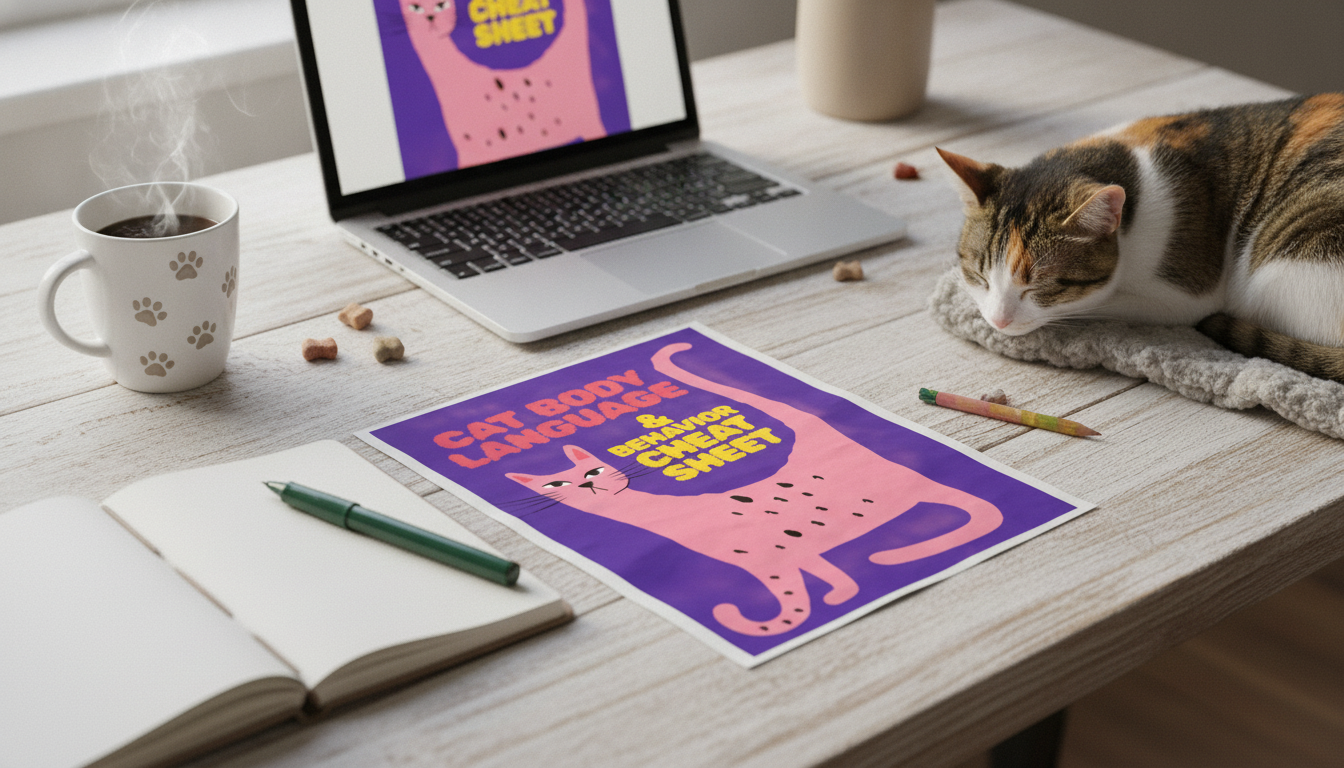
Cat Body Language & Behavior Cheat Sheet: A Printable Guide to Feline Signals, Postures, and Meows
Cats communicate constantly through posture, tail and ear positions, facial tension, and vocal patterns. A simple, printable reference helps decode what a cat is feeling in the moment—so handling, play, introductions, and vet visits become calmer and safer. Use the guide as a quick “fridge sheet” for the most common signals and what to do next.
How Cats Communicate: The Three Channels
Cat communication is easiest to read when you combine three inputs instead of relying on just one signal.
- Body language: Posture, tail carriage, ears, eyes, whiskers, and muscle tension often reveal emotion before a cat moves or vocalizes.
- Vocalizations: Meows are flexible and context-driven; the same sound can mean different things depending on body cues.
- Context: Environment changes, unfamiliar people/animals, pain, and resource competition can shift signals quickly; always read the whole scene.
For deeper behavior basics from veterinary and welfare organizations, see AAFP Cat Friendly resources and International Cat Care guidance.
Tail, Ears, and Eyes: Quick Reads for Mood
When a cat’s feelings change fast, the “small parts” often change first. Tail speed, ear angle, and pupil size can shift within seconds.
- Tail up with a relaxed tip often signals friendly intent; a “question mark” curl can mean playful curiosity.
- Tail puffed and/or low can indicate fear or high arousal; give space and reduce stimuli.
- Fast tail thrashing commonly means agitation; pause petting or play and allow a reset.
- Ears forward tend to indicate interest; ears sideways (“airplane ears”) can suggest uncertainty or overstimulation.
- Ears flattened back are a strong warning sign; avoid handling and remove triggers.
- Slow blinks often indicate comfort; returning a slow blink can be a low-pressure social gesture.
- Dilated pupils can be fear, excitement, or low light—pair with posture and movement to interpret accurately.
Signal → Likely Meaning → What to Do
| Signal | Likely meaning | What to do next |
|---|---|---|
| Tail upright, loose body | Friendly/approachable | Offer a hand to sniff; speak softly; allow the cat to initiate contact |
| Tail thrashing, skin rippling | Overstimulation/irritation | Stop petting; give space; provide a quiet spot |
| Puffed tail, crouched posture | Fear/startle response | Back away; reduce noise; allow escape routes |
| Ears forward, whiskers neutral | Curious/engaged | Offer enrichment: wand toy, treat hunt, or interactive play |
| Ears flattened, stare or growl | High stress/defensive | Do not reach in; remove triggers; consider a calm separation |
| Slow blink + relaxed facial muscles | Comfort/trust | Maintain calm; reward with gentle interaction if invited |
Postures and Distance: When a Cat Wants Space (and When It Doesn’t)
Think in terms of “distance preferences.” A relaxed cat may close the gap, while an uneasy cat asks for space through stillness, angles, and retreat.
- Relaxed posture: Loose limbs, normal breathing, and soft facial features—often a good time for gentle interaction if the cat approaches.
- Crouched and tucked: Weight low, legs under body—often uncertainty or fear; avoid looming and allow retreat.
- Sideways “big cat” stance: Attempting to look larger; can precede a swat or escape—pause and create distance.
- Belly exposed: Not always an invitation to pet; many cats will grab or bunny-kick if hands approach the belly.
- Approach/avoid signals: Leaning in, rubbing, or head-butting vs. backing away, freezing, or hiding; follow the cat’s choice.
- Redirected aggression risk: A startled cat may lash out at the nearest person or pet; separate calmly if arousal is high.
Common Meows and Sounds: Pairing Voice With Body Language
Sounds are most accurate when the body matches. If the voice says “friendly” but the body says “tense,” trust the body.
- Short meow: Greeting or attention request; check for upright tail and relaxed posture before engaging.
- Repeated or loud meowing: Urgency, frustration, or learned attention behavior; rule out hunger, stressors, or medical issues if new.
- Chirp/trill: Friendly social sound often used in greetings or to encourage following; respond with calm talk and gentle engagement.
- Purr: Can indicate contentment, but may also occur during stress or pain; confirm with relaxed posture and normal appetite/behavior.
- Hiss/growl/spit: Clear warning; stop interaction, increase distance, and provide an escape route.
- Chatter at windows: High arousal during prey viewing; offer a toy or food puzzle to redirect energy safely.
Handling, Petting, and Play: Practical “Do This Next” Tips
Small adjustments reduce bites and scratches while helping cats feel more in control.
Printable Cheat Sheet: How to Use It Day-to-Day
Recommended in-stock picks
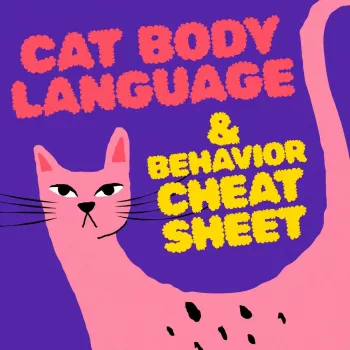
- Cat Body Language & Behavior Cheat Sheet (Printable Cat Communication Guide) — a quick-reference print you can keep by the carrier or fridge.
- Nordic Rabbit Statue Table with Tray — a handy tray surface for setting out treats during low-pressure introductions or enrichment sessions.
When Signals Suggest Pain or a Medical Problem
For trusted medical and behavior information, the Cornell Feline Health Center is a solid reference point.
FAQ
Does a belly-up cat want belly rubs?
Not always. Belly exposure often signals trust or relaxation, but many cats instinctively protect the belly and may grab or bunny-kick; try petting cheeks or chin and pause frequently to check consent.
What does tail flicking mean while petting?
Tail flicking or thrashing usually means arousal is rising and overstimulation is close. Stop petting, give the cat space, and watch for other cues like ears rotating back or skin rippling.
Why is my cat purring but acting tense?
Purring can happen during stress or discomfort as well as contentment. If the body looks tight (crouching, flattened ears, hiding) or there are other changes like appetite or litter box issues, contact a veterinarian.











Leave a comment