Toddler Nightmares: 5-Step Comfort Plan & Bedtime Fixes
What to Do When Your Toddler Has Nightmares: Practical Comforting Tips and Bedtime Solutions
Nightmares can feel overwhelming—for toddlers who wake up scared and for parents who are trying to soothe them at 2 a.m. The right response can reduce fear in the moment and make bedtime feel safer over time. Use the steps below to calm nighttime wake-ups, strengthen a reassuring routine, and spot when it might be something other than a nightmare.
Nightmares vs. night terrors: why it matters
Not every middle-of-the-night scream is the same, and matching your response to the type of episode can prevent longer wake-ups and more distress.
- Nightmares usually happen in the second half of the night. A toddler may wake fully, remember pieces of the dream, and seek comfort.
- Night terrors often happen earlier in the night. A child may scream, thrash, or look awake but be hard to console—and typically won’t remember it in the morning.
- What helps differs: nightmares benefit from comfort and reassurance; night terrors are usually best handled by keeping your child safe and waiting it out calmly without trying to “talk it through.”
- If episodes are frequent, intense, or paired with snoring, breathing pauses, or big daytime behavior changes, consider discussing it with your pediatrician.
For additional background reading, see guidance from American Academy of Pediatrics (HealthyChildren.org) and the NHS.
What to do in the moment (a calm, repeatable 5-step plan)
When your toddler bolts upright crying, your goal is simple: communicate safety, keep the room low-stimulation, and help them return to sleep without creating a brand-new nighttime routine.
- Stay close and steady: Keep lights low, use a soft voice, and offer physical reassurance if your child wants it (a hug or a hand on their back).
- Name the feeling, not the fear: Try: “That was a scary dream. You’re safe now.” Skip long explanations; nighttime is not the best time for logic.
- Ground them in the present: Help them notice what’s real and safe—favorite blanket, stuffed animal, a sip of water, the feel of their pillow.
- Keep it brief and consistent: Use the same mini-sequence each time (quick cuddle → bathroom/water if needed → tuck-in). Predictability is soothing.
- Avoid reinforcing avoidance: If possible, return them to their own bed rather than starting new habits that are hard to sustain (like long stays in your bed).
Comforting phrases toddlers understand
Toddlers do best with short, repeatable language—especially when they’re half-asleep and dysregulated.
- Simple script: “You’re safe. I’m here. Your body can rest.”
- Choices with boundaries: “Do you want a hug, or do you want me to sit beside your bed?”
- Monsters/scary images: Validate the emotion without confirming the threat: “That sounded scary. Monsters aren’t real, and you’re safe in your room.”
- Try a tiny ‘bravery’ ritual: a special stuffed animal “guardian,” a nightlight, or a quick “safe room check” that ends the same way every time (one peek in the closet, one under-bed glance, then back to bed).
Bedtime routine adjustments that reduce nightmares
- Protect the wind-down hour: Choose calm play, dim lights, and quiet connection (a short book, cuddles, a gentle song).
- Avoid stimulating screens close to bedtime: Fast-paced shows—and even “kid” content with chase scenes—can show up later in dreams. Swap to stories, gentle music, or a warm bath.
- Keep sleep timing consistent: A regular bedtime and wake time helps prevent overtiredness, which can worsen sleep disruptions. For sleep basics by age, see the CDC’s sleep resources.
- Watch for “scary spillover”: New childcare settings, family changes, travel, potty training, and big developmental leaps can temporarily increase nightmares.
Common triggers and simple fixes
Fast troubleshooting: trigger → bedtime tweak
| What you notice | Likely trigger | Try tonight |
|---|---|---|
| Wakes crying and remembers a scary dream | Nightmare | Brief comfort + return to bed; reassure safety |
| Screams early in the night, inconsolable, looks half-awake | Night terror | Stay nearby for safety; don’t fully wake; wait calmly |
| Nightmares after late bedtime or missed nap | Overtiredness | Earlier bedtime and quieter wind-down |
| Nightmares after a new show/story | Scary content | Swap to calm media; choose soothing stories |
| Restless sleep, snoring, mouth breathing | Possible sleep-disordered breathing | Discuss symptoms with pediatrician |
Printable-style nightly plan (example) for the fridge
| Step | What to do | What to say |
|---|---|---|
| 1 | Low light, calm voice | “You’re safe.” |
| 2 | Quick comfort | “That was a scary dream.” |
| 3 | Ground in the room | “Feel your blanket—cozy and warm.” |
| 4 | Back to bed | “It’s sleep time now.” |
| 5 | Short goodbye | “Goodnight. I’ll check on you.” |
A guided approach for parents who want a step-by-step plan
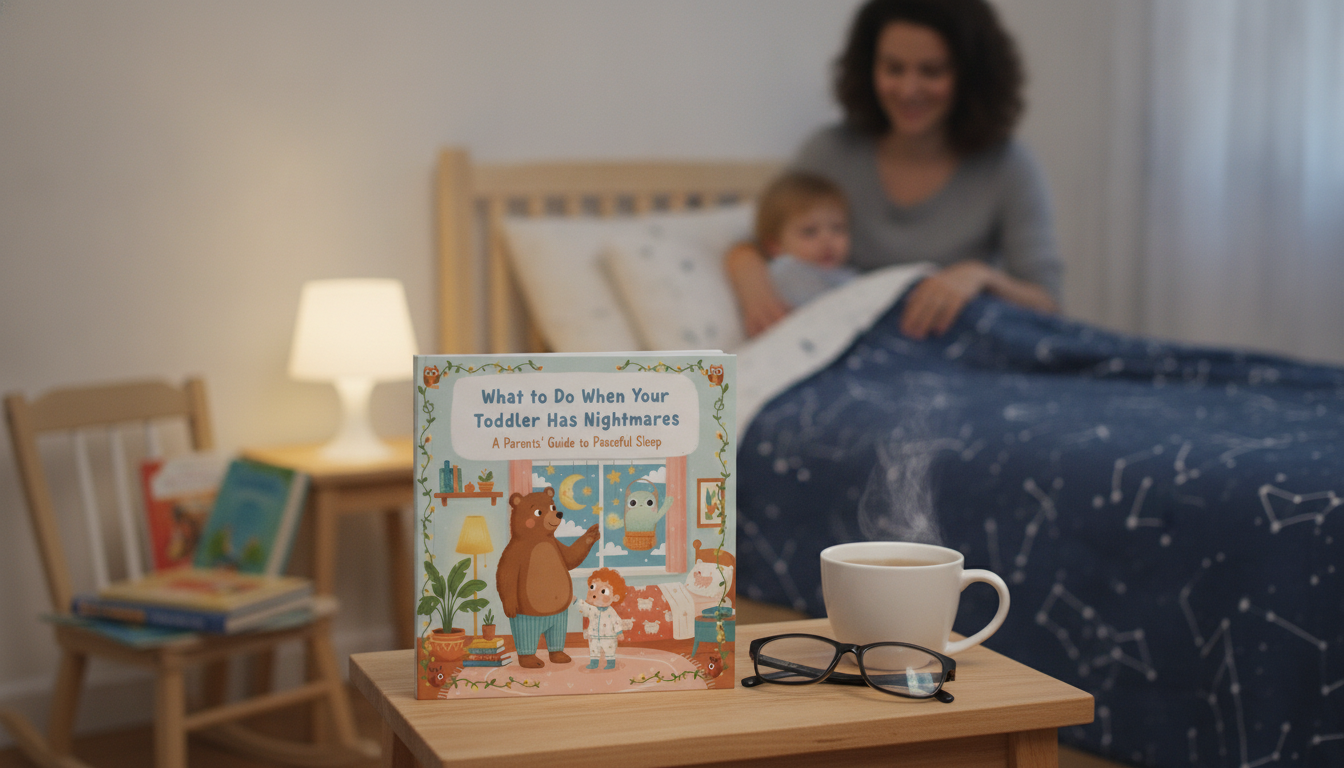
- What to Do When Your Toddler Has Nightmares (Ebook Guide) organizes comforting language, bedtime routines, and practical troubleshooting into a consistent plan.
- Finally Focused: The Anti-Procrastination Workbook can be a helpful daytime reset when sleep disruption is wrecking routines and follow-through.
When to get extra support
FAQ
Should a toddler be woken up during a night terror?
Usually not—night terrors tend to pass faster if you keep your child safe and wait calmly, since waking can prolong confusion and distress. If episodes are frequent, dangerous, or paired with concerning sleep symptoms, discuss it with your pediatrician.
How long do toddler nightmares usually last?
The intense part of a nightmare is often a few minutes, but phases of more frequent nightmares can last a few weeks during stress or developmental changes. Consistent bedtime routines, avoiding scary content, and preventing overtiredness often shorten the stretch.
What bedtime routine helps reduce nightmares?
A calming wind-down hour, a consistent bedtime/wake time, soothing stories or music, and a comfort object help signal safety. If separation anxiety is part of the wake-ups, gradual fading (sitting close, then moving farther away over nights) can reduce dependence while staying reassuring.











Leave a comment